7.1.1If I speed up, will you slow down?
Related Rates Introduction

As the length increases at a constant rate, how does the width change?
If
is the rate the width is changing and is the rate the length is changing, write an equation relating these two rates. As the length increases, how does the perimeter,
, change? What is ? As the length increases, what happens to the area? Is the rate of change for the area a constant?
Changes in the length and width also affect other measurements, such as the area, perimeter, and the length of the diagonals. These rates are dependent, since they depend on the rate of the changing dimensions. Because of this relationship, we call them related rates.
Translate each of the expressions below into a complete sentence. Determine if each rate is positive, negative, zero, or some combination. Then determine is the rate is constant or not. For example,
In each expression below:
The amount of gas a car uses each hour depends on how fast the car is traveling. If
What do
and represent? Assume a car uses
gallons of gas to travel miles. What is when the car is traveling mph? mph? mph Notice that
varies directly with . Write an equation relating and for the car described in part (b) above.
.png)
Sketch a graph that shows
, the height of coffee in the cup after seconds. Is positive, negative, or neither? Does change at a constant rate? Explain how your answer relates to the shape of the cup. Does volume of coffee in the cup vary directly with time? Sketch a graph that shows
, the volume of coffee after seconds. Is positive, negative, or neither? Does change at a constant rate? Explain. For the coffee cup, how is
related to ? Discuss this with your team and write a complete description.
These last few problems all focused on rates of change. Often, when something changes, several other measures change accordingly, causing their rates to be related. We call these related rates.
RELATED RATES
When two rates are related, we can describe their relationship with a related rate statement. It is important to remember that related rates are not always proportional. Consider the situations below.
.png)
Make a prediction. Will the boat approach the dock at a constant rate? If you have never been on a boat, talk to someone who has before stating your prediction.
What do
and represent? What do and represent? Explain. Are
and each positive or negative? Explain. Do you think that
and each are increasing, decreasing, or constant? Explain. Are the related rates in this situation directly proportional? Explain.

Differentiate each equation with respect to
What is
for the function in part (a)? Write your answer in terms of only. Evaluate
for the function in part (a). Write the equation of the tangent line at
for function in part (a). If the tangent line is used to approximate the function at
, will it give an underestimate or an overestimate? Use part (f) to determine your answer.
Integrate. Homework Help ✎
For each function below, calculate the average value over the given interval and state the value of
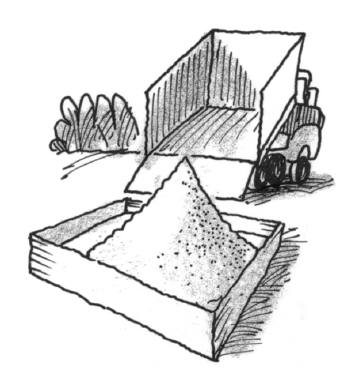
Sand is being poured into a sandbox, making a conical pile with radius
Sketch the region bounded by
Find two positive numbers whose sum is
Assume the altitude of a flying kite remains constant. As the length of rope,
.png)